For a long time, irritable bowel syndrome was a diagnosis of last resort, the label doctors reached for after everything else came back clean. Rome IV changed that. IBS is now a positive diagnosis: recurrent abdominal pain, tied to a change in stool frequency or form, relieved by defecation.
That doesn't mean skip the exam. A few findings still change the picture entirely. What's left once those are absent is the pattern itself, alternating, cramping, and otherwise unremarkable.
For a long time, irritable bowel syndrome was a diagnosis of last resort, the label reached for after everything else came back clean. Rome IV changed that. IBS is now a positive diagnosis: recurrent abdominal pain, tied to a change in stool frequency or form, relieved by defecation.
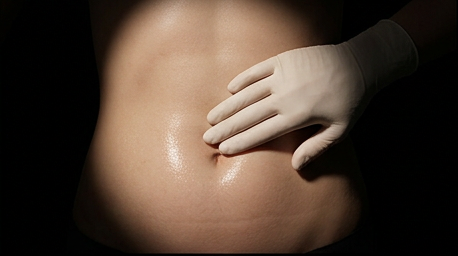
That doesn't mean skip the exam. A few findings still change the picture entirely: blood in the stool, unexplained weight loss, a new onset after fifty, a family history of colon cancer. None of those were here.
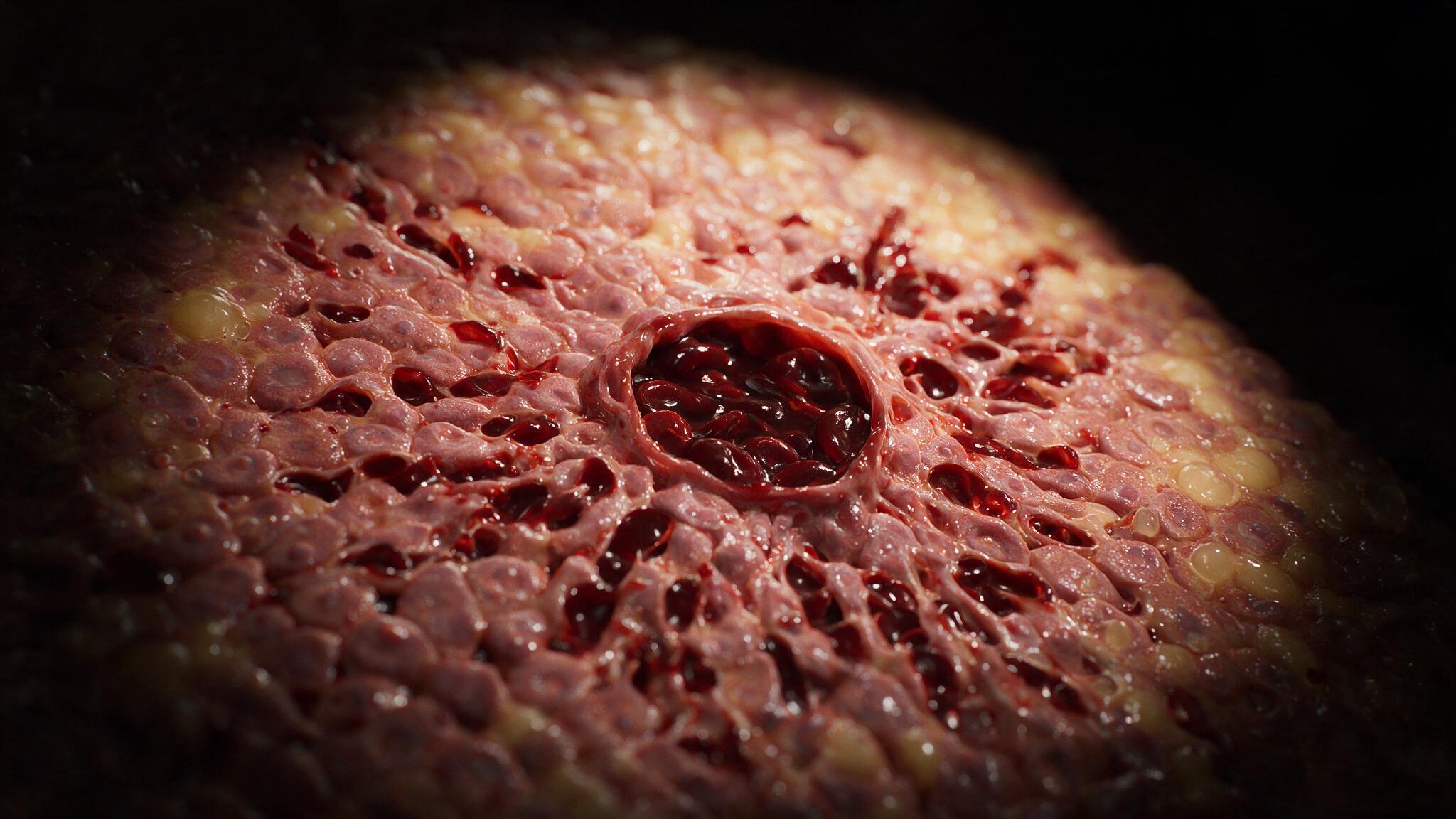
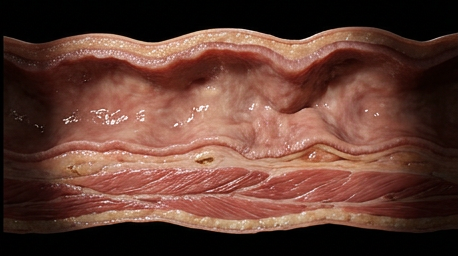
Push past the abdominal wall and the tissue underneath tells its own story: mucosa, submucosa, muscle, all completely normal. No inflammation, no ulcer, no mass. That's not an incidental finding, it's the finding.
Every test in this workup, ESR, CRP, celiac antibodies, a CBC, exists to confirm exactly this: nothing here that Crohn's, ulcerative colitis, or celiac disease would explain. Normal results don't rule IBS out. They're what lets it stand.
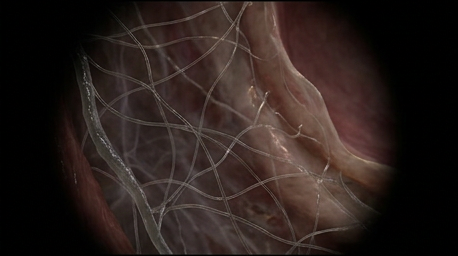
The colon runs its own nervous system, a dense mesh of nerve fibers threaded through its wall, largely independent of the brain. In IBS, that system is switched to a hair trigger.
A small, ordinary amount of gas distending the bowel should barely register. Instead the enteric nerves fire an alarm signal wildly out of proportion to the stimulus. The gut isn't damaged. It's misreading its own normal signals as danger.
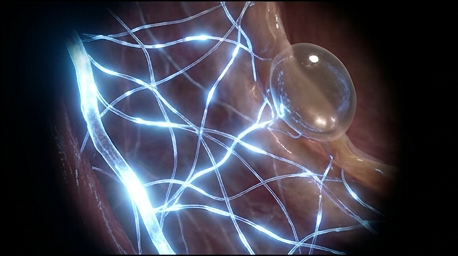
That same misfiring nervous system controls motility, and it doesn't fail in only one direction. In one segment, smooth muscle contracts too fast and too hard, pushing contents through before the colon can absorb what it needs to. That's a diarrhea day.
In another segment, the opposite: contractions slow to almost nothing, and contents sit, stalled, going nowhere. Same disorder, same nervous system, two opposite symptoms depending on which direction it swings that day.
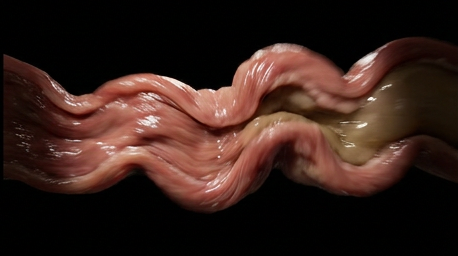
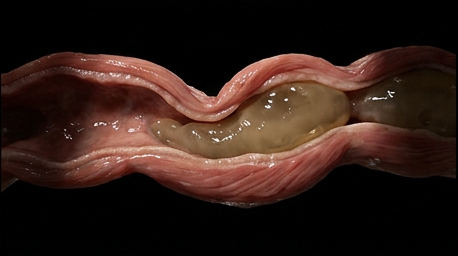
There's no lesion to remove here, which is why colonoscopy doesn't belong in this workup without one of the alarm features above. It's invasive, and it won't find anything the exam and labs haven't already ruled out.
Treatment starts before any prescription: reassurance, a high-fiber diet, regular exercise, a lactose-free trial if intolerance is suspected. Antispasmodics calm the overactive nerve-muscle signal directly. Nothing here targets a structure. Everything targets the system.
That mechanism has a lookalike worth telling apart. Benztropine, used for drug-induced extrapyramidal symptoms, blocks the same muscarinic receptors to calm muscle activity that's misfiring. But there, losing dopamine's control over acetylcholine release causes a real, measurable rise in cholinergic signal. In IBS, acetylcholine was never elevated. Dicyclomine isn't correcting an excess, it's turning down the gain on a system that overreacts to an ordinarily normal signal.
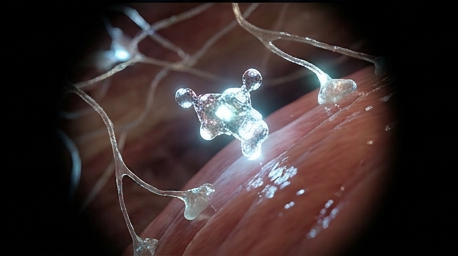

The alternating pattern that makes this diagnosis feel unstable, days of diarrhea followed by days of constipation, is exactly what one dysregulated nervous system produces when it swings between too much motility and too little. Rome IV lets that pattern stand on its own once the alarm features are absent and the labs come back clean. The harder discipline isn't ordering more, it's knowing when to stop: no colonoscopy, no escalating workup chasing a lesion that was never going to be there. Reassurance, diet, and a nervous system calmed back down are the actual treatment, and for most patients, they're enough.
You're set. We'll send the full write-up to your inbox shortly.