A burn tells you how it happened, if you know how to read it. Accidental scalds are messy: ragged edges, splash marks, uneven depth, because a child in scalding water thrashes and fights to get out. This one doesn't do any of that.
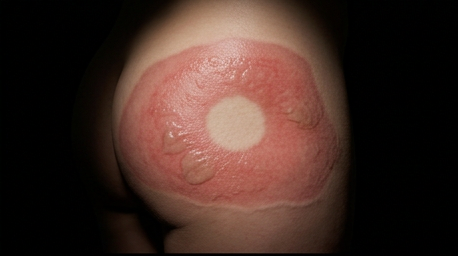
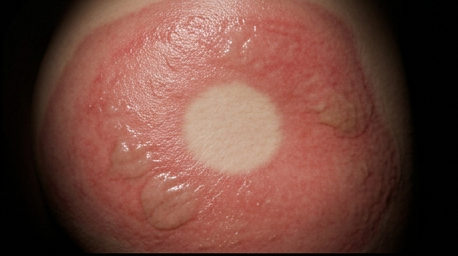
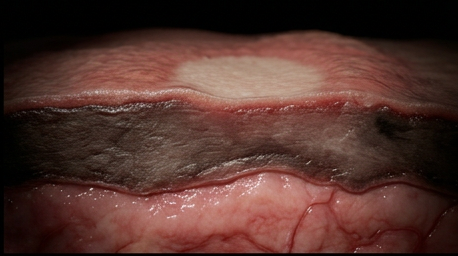
The border is sharp. A clean tide-mark line separates burned skin from untouched skin, the same depth the whole way around. And in the center of the burn sits one small circle of skin that never burned at all.
A burn tells you how it happened, if you know how to read it. Accidental scalds are messy: ragged edges, splash marks, uneven depth, because a child in scalding water thrashes and fights to get out.
This one doesn't do any of that. The border is sharp, a clean tide-mark line the whole way around, the same depth on every side. In the center sits one small circle of skin that never burned.
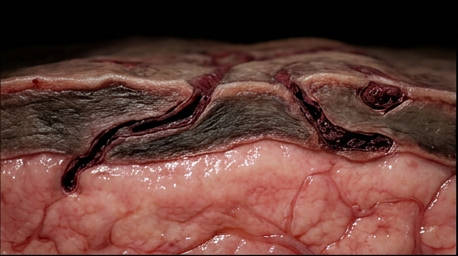
Push past the surface and the reason this wound isn't healing on its own becomes obvious. Full-thickness burns destroy the entire dermis, and dermis is what a wound needs to rebuild itself from.
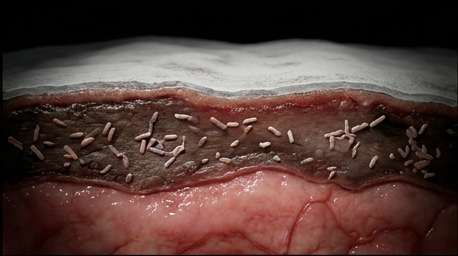
What's left is eschar: dead tissue sitting on top of vessels that clotted shut the moment they burned. No blood reaches this layer anymore, which means nothing carried in the bloodstream reaches it either.
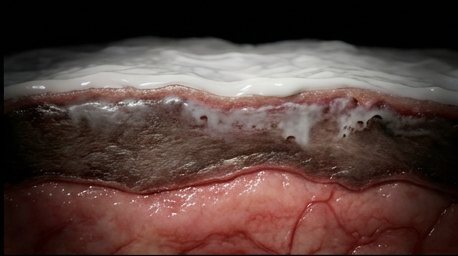
Zinc oxide is a barrier. It sits on the surface and blocks moisture, which is exactly the wrong job for a burn wound. Underneath that white film, bacteria multiply in tissue that's warm, moist, and rich in protein, and the cream never touches them.
Systemic antibiotics don't fix this either. They travel through the blood, and the blood doesn't reach the eschar. The infection sits in the one place in the body a normal antibiotic can't get to.
Two topical drugs are built for exactly this problem, and they solve it differently. Silver sulfadiazine works at the surface: broad-spectrum, painless, and its softening action helps loosen the eschar for later removal. What it doesn't do is reach deep.
Mafenide does reach deep. It's the one agent that diffuses all the way through avascular eschar, which is why it's used on the thickest burns. The tradeoff is real: it stings on application and can throw off the body's acid-base balance if used too broadly.
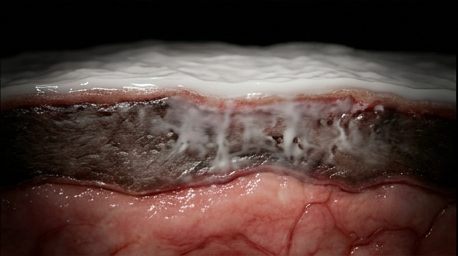
Neither cream replaces surgery. Full-thickness eschar is dead tissue, and dead tissue doesn't heal, it just sits there until someone removes it. Debridement excises it down to viable, bleeding tissue, the only surface a graft will actually take to.
Then comes the part the burn alone doesn't explain. A skeletal survey, a CT of the neck, a CT of the head. Findings that have nothing to do with hot water and everything to do with how this child was actually hurt.
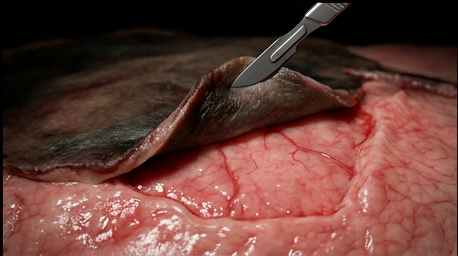
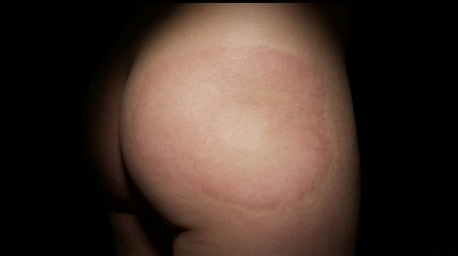
The pattern that opened this case, the sharp border, the spared circle, was never just a burn. It's a pressure map: the shape of what was pressed against the tub and what wasn't, holding perfectly still the whole time. A child struggling to escape hot water doesn't leave an edge that clean. Everything ordered after that first look confirmed it: social services, consulted before the wound care was even finished, pediatric surgery for the burns themselves, and imaging that had nothing to do with the story anyone told, a fractured cervical vertebra, small hemorrhages scattered through the brain. The wound closes the same way any burn closes: debridement, grafting, weeks of dressing changes. The diagnosis behind it doesn't close nearly as fast. Non-accidental trauma isn't confirmed by one finding, it's confirmed by a pattern, and the first piece of that pattern was sitting in plain sight on the skin the whole time.
You're set. We'll send the full write-up to your inbox shortly.